A landscape made by water
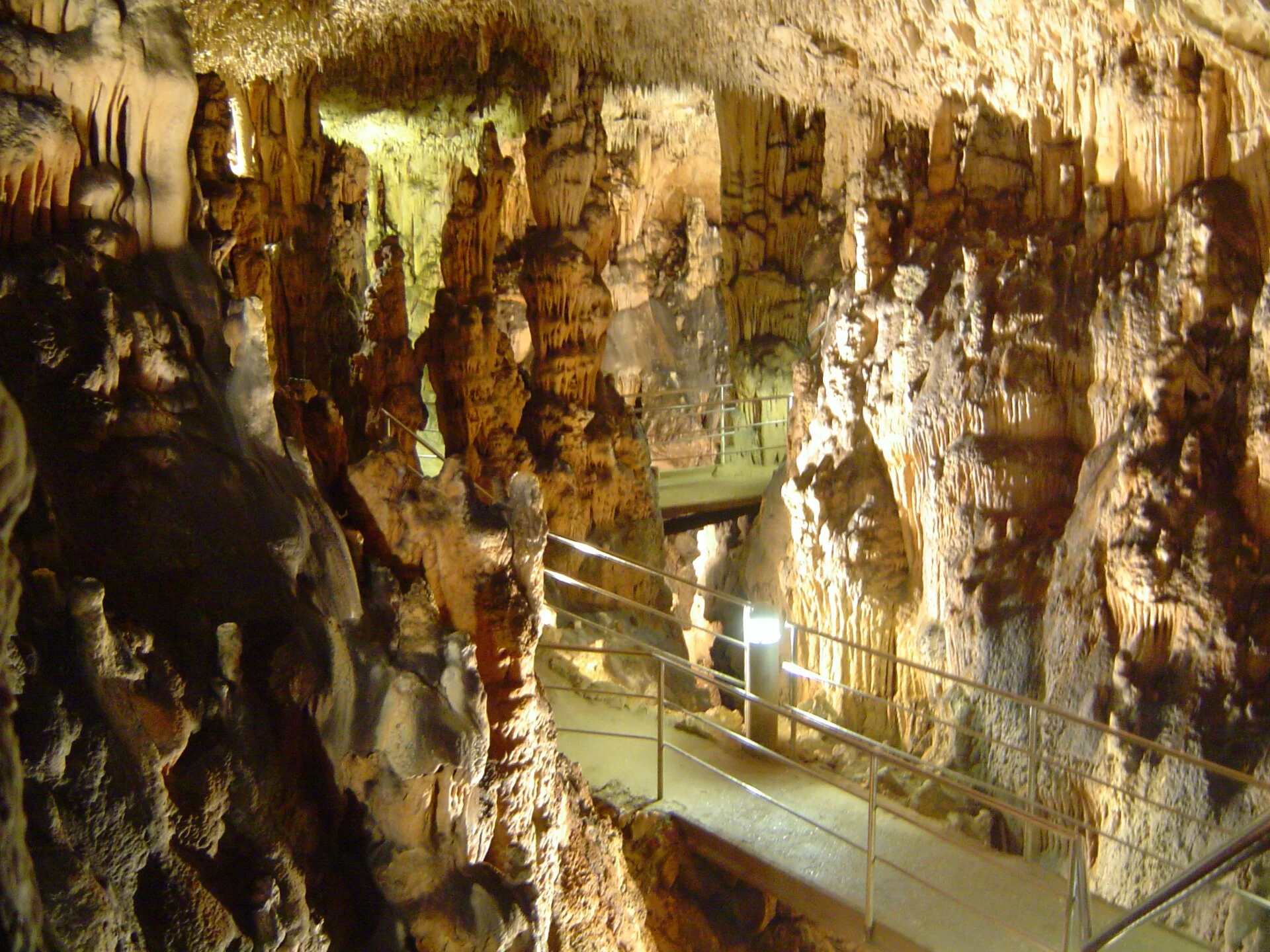
Krk is a limestone island. Water moving through cracks can dissolve the rock, gradually opening underground spaces. Inside Biserujka, water also leaves something behind: mineral deposits that give the cave its distinctive forms.
Reading the formations
Stalactites grow down from the roof; stalagmites rise from the floor. Where they meet, a column may form. Their shapes invite comparison, but each is a record of water taking a particular path. Enjoy them with your eyes and leave them untouched.
Small, with room for wonder
The cave is approximately 110 metres long; the visitor path occupies only part of it. The operator identifies the Great Hall, Arched Hall and Cypress Hall among its underground spaces. The lowest measured point is 13 metres below the entrance. This is a compact visit, not an expedition into vast tunnels.
Life without daylight
Caves are living habitats as well as geological spaces. Biserujka is known for specialised underground fauna, and cave-bear bone fragments have also been found here. Small creatures and mineral formations both depend on visitors respecting the route and the guide’s instructions.
A different climate
The operator reports approximately 15°C in the deeper cave and high humidity. The contrast with a hot island afternoon can be immediate. A light extra layer and shoes with good grip help you concentrate on the cave rather than the chill.
Information checked on 4 October 2026 · Sources & photography